+256 755 347258 [email protected]

Surgical Treatment
Cataract Surgery
State-of-the-art cataract removal using phacoemulsification and premium intraocular lenses. Most procedures take under 30 minutes with same-day discharge all performed under local anaesthesia.
Understanding the Condition
What Is a Cataract?
A cataract is a clouding of the eye's natural lens, which lies behind the iris and pupil. Cataracts are the most common cause of vision loss in people over age 40, and the principal cause of blindness worldwide. Surgery is the only effective treatment, and at Georgina, it is performed as a day procedure with a rapid recovery.
What CAuses
Diabetes
Smoking
Obesity
Family history of cataracts
Excessive alcohol use
Exposure to radiation
How Is Cataract Surgery Performed?
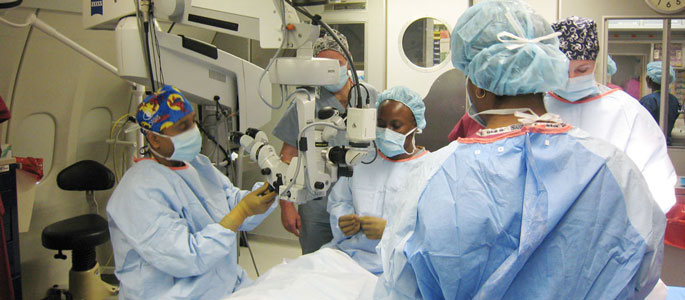
Cataract surgery involves removing the clouded natural lens of the eye and replacing it with a clear, permanent artificial lens called an intraocular lens (IOL) to restore vision. Depending on your needs, your doctor may recommend different types of lenses, including those that correct distance and near vision (presbyopia-correcting lenses), astigmatism (toric lenses), or standard monofocal lenses that provide sharp distance vision, especially in low-light conditions. After the cataract is removed, the new lens is placed inside the eye’s capsule, which supports it. In some cases, this capsule may become cloudy over time, but this can be easily treated with a quick YAG laser procedure to restore clear vision.
What We Offer
Phacoemulsification (small-incision)
Laser-assisted cataract surgery
Premium IOL implantation
Monofocal, multifocal & toric lenses
Same-day discharge
Signs & Symptoms
Blurry or cloudy vision
Faded or yellowed colours
Glare and halos around lights at night
Frequent changes to glasses prescription
Double vision in one eye
Benefits
Restores daily functioning
Improves vision clarity
Helps you regain independence
Allows you to enjoy hobbies again
Enhances mental well-being
Significantly improves quality of life
What to Expect
Simple and manageable recovery process
Vision improvement timeline varies
Protect the eye for one week
Avoid strenuous activities for one week
Use prescribed eye drops
Attend a follow-up appointment
What to Expect
Your Care Journey
Consultation & assessment
Comprehensive eye examination including biometry measurements to select the most appropriate intraocular lens for your vision goals.
Pre-operative preparation
Eye drops are prescribed to start a few days before surgery. You will receive full instructions including fasting requirements.
The procedure (20–30 min)
Performed under local anaesthesia with sedation. The cloudy lens is broken up with ultrasound and removed, and a clear IOL is inserted.
Recovery & follow-up
Most patients notice improved vision within 24 hours. Full recovery takes 4–6 weeks with follow-up appointments and protective eye drops.
Book a Consultation
Our specialists are available for consultations at multiple Kampala locations. Same-week appointments usually available.
or call us
+256 755 347258
Mon–Sat 8:30am – 6:00pm · Sun 10am–4pm
📍 Our Locations
Kira Road, Mulago · Tank Hill, Muyenga · Equatoria Mall · Oasis Mall · Naalya/Namungongo
Patient Questions
Frequently Asked Questions
No. The procedure is performed under local anaesthesia with sedation. Most patients feel only mild pressure during the operation and no pain.
Most patients notice a significant improvement within 24–48 hours. Vision continues to improve over the following weeks as the eye heals.
Your surgeon will recommend the most appropriate IOL based on your vision needs, lifestyle, and eye measurements taken during consultation.
Usually the second eye is operated on 1–2 weeks after the first, to allow the initial eye to heal and vision to stabilise first.
We have a team in place to handle any delays or complications that may arise during a project. We work closely with our clients to find solutions and keep them informed throughout the process.
Explore More